
UPSTATE COMMUTER SHED
INDUSTRY INVENTORY AND ANALYSIS OF TRADED CLUSTERS

Labor Force (10/2022)
197,769
The Union Spartanburg Commuter Shed

Unemployment Rate (10/2022)
4.3%
The Union Spartanburg Commuter Shed

Bachelors Degree or Advanced Degree
17.8%
The Union Spartanburg Commuter Shed
Net Jobs Gained Over 10 Years
41,003 Jobs
The Union Spartanburg Commuter Shed
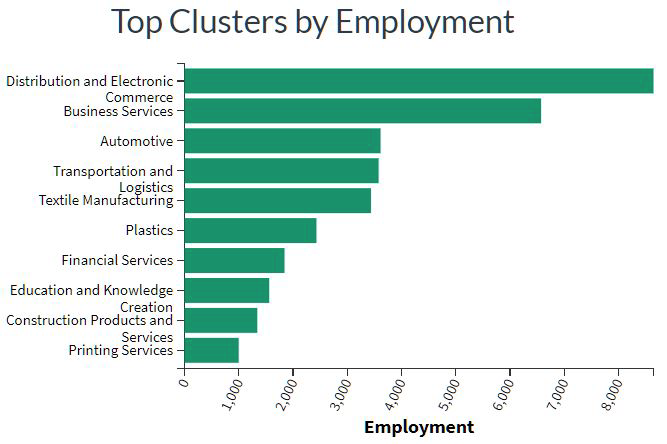
TOP CLUSTERS
The Traded Clusters within the Union / Spartanburg Commuter Shed with the highest 2023 employment numbers in excess of 100,000 were Production, Transportation, and Logistics.
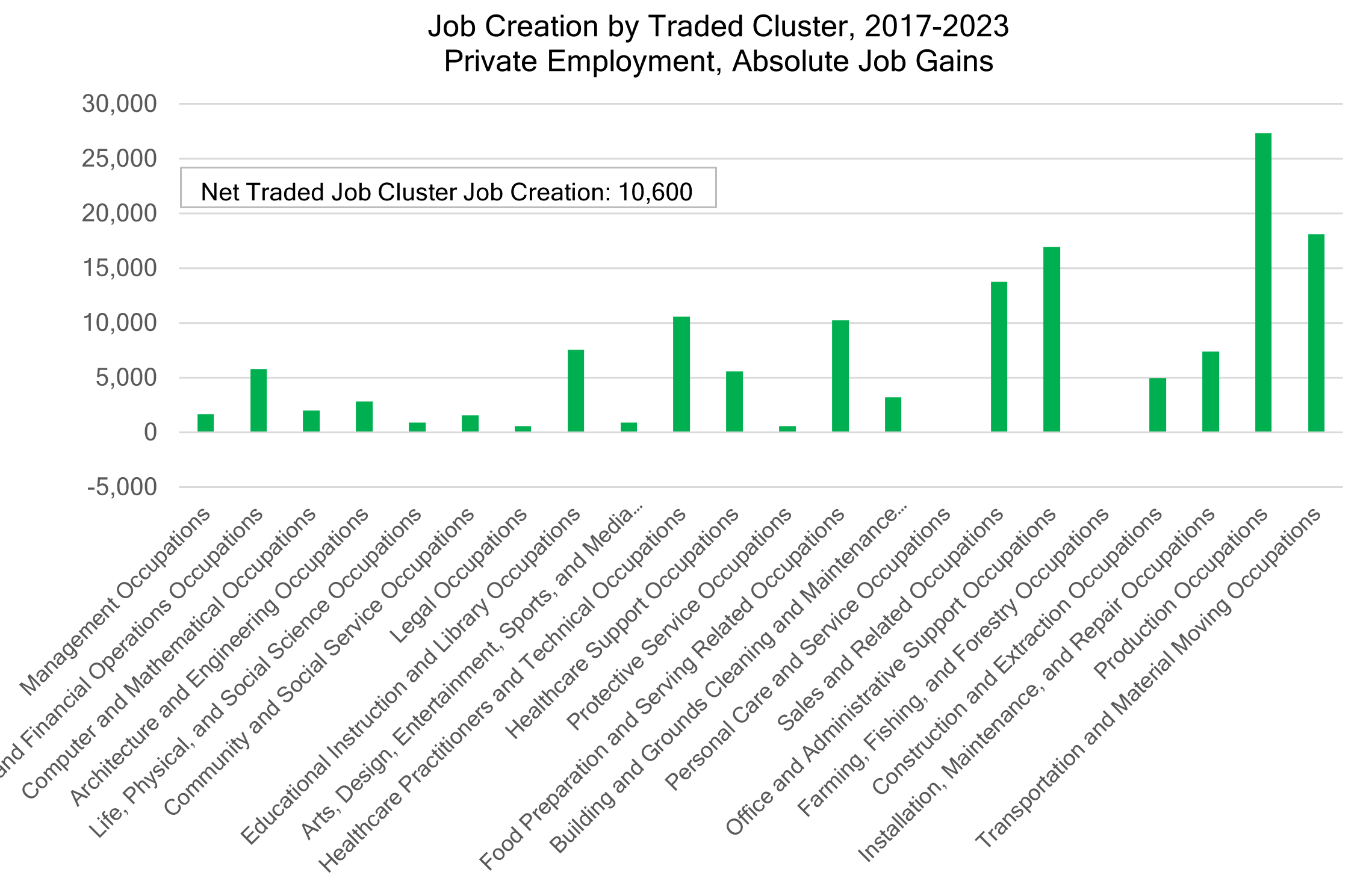
Within these, growth can be seen between 2017 and 2023 in the Production, Transportation, and Logistics Clusters.

JOB CREATION
Production added 27,320 jobs, while Transportation and Logistics added 18,080 jobs. Areas of loss during this time include Personal Care and Services Occupations, which lost 80 jobs. It should be noted, however, that there was a net increase of 10,600 jobs between 2017 and 2023.
EMPLOYMENT
Between 1998 and 2017, employment within several of the major Traded Clusters within the commuter shed tracked overall employment trends during this period, showing a decline between 2008 and 2009 at the apex of the Great Recession and a slow recovery or flat growth between 2009 and 2016.
The region continues to move towards a more diverse overall economy as the commuter shed moves away from Textile Manufacturing as a major employment base. In 2023, the U.S. Department of Commerce Economic Development Administration (EDA) selected the SC Nexis for Advanced Resilient Energy (SC Nexus) as a national technology hub. In 2024, it was awarded $45 million to implement advanced cyber-secure grid resilience technologies (GRT).
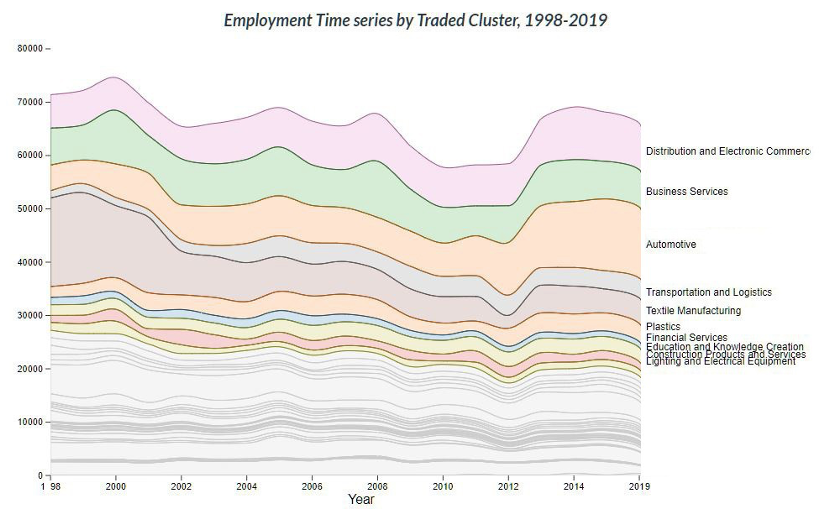
Total employment among all traded clusters within the commuter shed has not returned to levels seen in year 2000 of approximately 75,000 jobs. However, continued growth within Automotive and Distribution and Electronic Commerce in particular point toward continued overall recovery and return to 2000 levels with a more diverse overall economy as the commuter shed moves away from Textile Manufacturing as a major employment base.